
Binocular vision disorders and prism correction.
Binocular vision disorder is a condition in which the eyes cannot work together properly to form a single image. Normally, both eyes are directed at the same object, and the brain combines two images into one clear picture. If this process is disrupted, a person may experience double vision, blurred vision, problems judging distances, or loss of spatial perception.
Causes of binocular vision disorders
- Strabismus — a condition in which the eyes cannot focus on the same object at the same time due to displacement of one eye to the side.
- Anisometropia — a difference in refractive power between the eyes, causing them to have different focal distances.
- Amblyopia ("lazy eye") — reduced vision in one eye, in which the brain ignores the image coming from that eye.
- Neurological and traumatic disorders — brain injuries, strokes, and neurological diseases can also affect binocular vision.
- Eye diseases — certain conditions, such as cataracts or retinal disorders, can cause blurred vision in one eye.
Symptoms
- Double vision (diplopia)
- Loss of depth and spatial perception
Mechanism of binocular vision
Binocular vision ensures the coordinated work of both eyes, where each eye forms a slightly different image, and the brain combines them into one three-dimensional (stereoscopic) image. This allows us to perceive depth and accurately estimate the distance to objects. A binocular vision disorder means that the images from each eye are not combined properly, which can lead to double vision (diplopia), image instability, or blurred vision.
Types of binocular vision disorders
- Phorias and tropias — types of strabismus:
Phorias (latent strabismus) appear only when one eye is covered, while vision remains normal when both eyes are open.
Tropias are manifest forms of strabismus, where the deviation of one eye is constant and noticeable.
- Accommodative and non-accommodative strabismus — depending on whether the eye misalignment can be corrected with glasses.
- Intermittent strabismus — occurs periodically, for example, during fatigue or stress.
- Vergence disorders — problems with the coordination of convergence and divergence, which are needed to focus the eyes on objects at different distances.
Causes of binocular vision disorders
- Genetic factors: some binocular vision disorders, such as strabismus, may be hereditary.
- Refractive errors: for example, farsightedness (hyperopia) often causes the development of accommodative strabismus.
- Improper function of the extraocular muscles: weakness or dysfunction of the muscles that control eye movement.
- Trauma: brain injuries or eye injuries can lead to binocular vision disorders.
- Nervous system diseases: for example, multiple sclerosis, stroke, or tumors that disrupt the function of the oculomotor nerves.
Treatment of binocular vision disorders
- Optical correction — the use of glasses or contact lenses to correct refractive errors.
- Prism glasses — lenses that change the direction of light rays and help the eyes work together in a coordinated way.
- Orthoptic exercises — special exercises that train the extraocular muscles and improve coordinated eye function.
- Occlusion therapy — temporary covering of the stronger eye to train the weaker eye, used in cases of amblyopia.
- Surgical intervention — in severe cases, surgery may be required to correct the muscles that control eye movement.
- Neurovisual training — methods of visual recovery using special programs to train the brain.
Prevention
- Regular eye examinations, especially in children, for timely detection of disorders.
- Visual exercises and proper visual workload routine: take regular breaks when working at a computer.
- Prevention of eye and head injuries, including the use of protective glasses during activities that carry a risk of injury.
Correct diagnosis of a binocular vision disorder is possible only after a comprehensive examination by an ophthalmologist or orthoptist, who will develop an individual treatment plan.
Prism vision correction
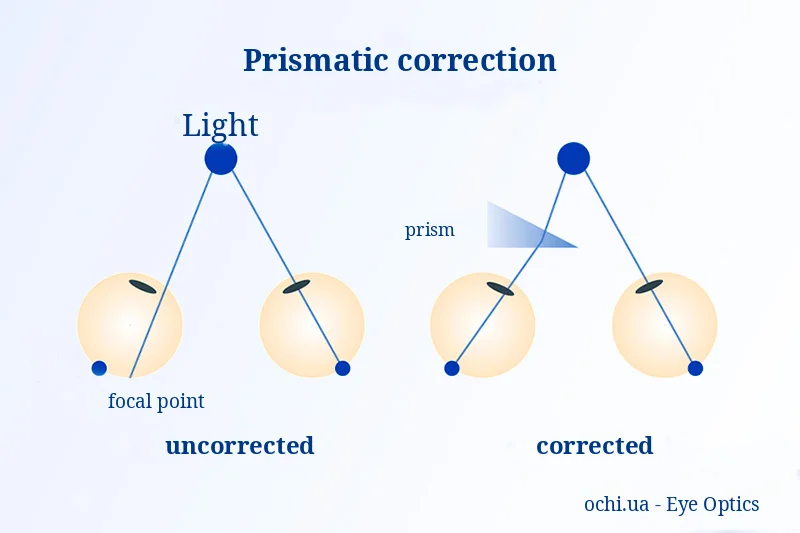
Prism vision correction is a method for correcting binocular vision disorders using special prism lenses. These lenses have a wedge shape that changes the direction of light rays, helping the eyes focus on a single object. Prism correction is useful for people who suffer from diplopia (double vision), strabismus, certain types of amblyopia, and other binocular vision disorders that cause difficulties with coordinated eye function.
How prism lenses work
Prism lenses refract light rays so that they are directed in the required direction for each eye. This helps prevent double vision and reduces the need for the eyes to constantly compensate for misalignment. The lens directs the rays so that they reach the central visual zone of each eye, helping the brain form a clear and single image.
Who is prism correction indicated for?
- People with strabismus, especially the latent form — phorias, in which the eyes naturally deviate to the side, but the person compensates for this with muscle tension.
- Patients with diplopia — a condition in which double vision occurs, particularly after a stroke or traumatic brain injury.
- People with vergence disorders — difficulties focusing the eyes on objects at different distances, which may occur with visual fatigue or asthenopia (eye strain).
- In certain forms of amblyopia, when one eye is "lazy" and the brain does not properly perceive the image from it.
Types of prism lenses
Prism lenses can be made in different forms and with different optical powers depending on the type and degree of the disorder. There are two main types:
- Fresnel prisms — adhesive prism films that are easily attached to regular eyeglass lenses and can be replaced.
- Permanent prism lenses — lenses built into the structure of the glasses themselves, more aesthetically pleasing but intended for long-term use.
Advantages and disadvantages of prism correction
Advantages:
- Relief of diplopia symptoms and reduction of eye strain.
- Improved visual comfort.
- Normalization of spatial perception and movement coordination.
Disadvantages:
- Prism lenses may distort the image, causing certain objects to appear warped.
- A gradual adaptation period may be required, as the brain needs time to get used to the new visual conditions.
- High cost, especially in the case of specialized or individually manufactured lenses.
Prism correction fitting process
Prism lenses are selected by an ophthalmologist or optometrist after a comprehensive examination, which includes checking binocular function, measuring eye deviations, and testing for the presence of diplopia. It is important to gradually increase the prism power to help the patient adapt and ensure the most comfortable vision possible.
Prism vision correction can significantly improve the quality of life of patients with binocular vision disorders, helping them eliminate symptoms of discomfort and improve visual stability.